


Essential Factors to Evaluate When Selecting the Right ADU Builder for Your Project in Orlando and Central Florida

An accessory dwelling unit (ADU) is a secondary, self-contained living space on your property that adds rental income potential or multi-generational housing flexibility, and choosing the right ADU builder keeps the project code-compliant and cost-predictable in Orlando and Central Florida. This article explains what homeowners should evaluate when selecting an ADU builder, from local permitting and licensing to cost, financing, materials, and proven results. Many property owners face uncertainty about Orlando ADU zoning laws, realistic construction costs, and which builders can navigate local setbacks and permit timing; this guide provides clear, actionable criteria to reduce that uncertainty. You will learn the key qualifications to verify, how a full-service builder streamlines the process, cost and financing trade-offs, material choices for Florida’s climate, and how to start with a contractor who manages permits and inspections. The sections below map directly to those decisions: qualifications, full-service process, cost and financing, materials and craftsmanship, zoning and permitting, proof of performance, and next steps to request an estimate. Throughout, the content integrates practical checklists, comparison tables, and financing options relevant to homeowners seeking a licensed ADU contractor Orlando and experienced ADU company Central Florida.
What Are the Key Qualifications to Look for in an ADU Builder?
A qualified ADU builder demonstrates local expertise, verifiable licensing and insurance, a track record of completed ADU projects, and clear contract terms that protect homeowners. Local expertise matters because building departments, setback rules, and permit reviewers in Orlando and surrounding Central Florida jurisdictions can vary, and an experienced builder anticipates those nuances to reduce delays and rework. Homeowners benefit from transparent portfolios and reference checks because they reveal how the contractor handles site constraints, utility connections, and budget changes in real projects. Below is a concise checklist of top qualifications to verify before selecting a builder, followed by a table that summarizes why each attribute matters and how it protects you.
Verify these core qualifications before hiring an ADU builder:
- Local expertise in Orlando and Central Florida permitting and zoning rules, demonstrated in project descriptions.
- Active contractor license and insurance that cover liability, workers' compensation, and performance safeguards.
- A documented ADU portfolio or case studies showing completed Detached ADUs, Attached ADUs, Garage Conversions, or Above-Garage Units.
- Clear, written contract terms such as fixed-price contracts, scope, timelines, and warranty provisions.
These items establish a foundation for homeowner protection and lead directly into examining specific credentials like licensing and insurance.
Builders’ credentials and why they matter:
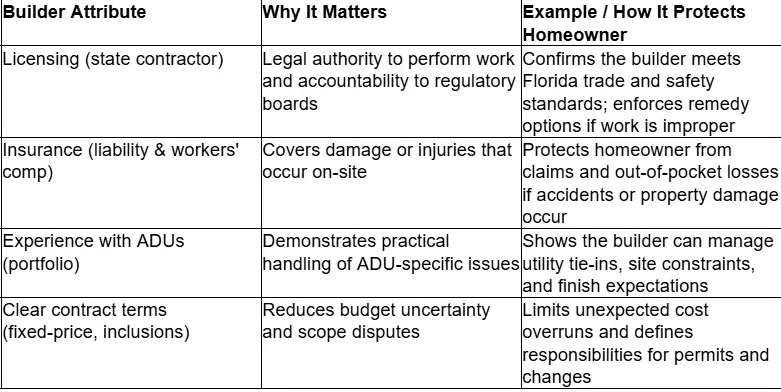
This comparison clarifies which attributes are non-negotiable and sets up the next topic: why local Orlando expertise is particularly important for ADUs.
Why Is Local Expertise in Orlando and Central Florida Critical for Your ADU Project?
Local expertise means the builder understands Orlando ADU zoning laws, setback requirements, typical inspection timelines, and the practical realities of building in Central Florida’s climate. That expertise reduces the risk of submitting incomplete plans, missing documentation, or failing inspections that cause costly rework and delays. A local builder often has established relationships with municipal reviewers and knows common local pitfalls—such as how lot coverage and parking rules apply to Attached ADUs or when variances may be needed—so they can advise on realistic designs and timelines. When evaluating candidates, request examples showing how the builder resolved local permitting challenges; this indicates practical problem-solving and shorter approval cycles.
Local permitting knowledge introduces the next verification step: confirming licensing and insurance to ensure legal protections for your project.
How Do Licensing and Insurance Protect Homeowners During ADU Construction?
Licensing establishes a legal baseline that holds builders accountable to state standards, while insurance transfers financial risk from the homeowner to the insurer in cases of property damage or worker injuries. Verifying the contractor’s active Florida license number and requesting proof of general liability and workers’ compensation insurance prevents homeowners from being liable for on-site incidents. Insurance also provides recourse if construction causes accidental damage to the primary dwelling or neighboring properties, and licensing allows homeowners to check disciplinary history. Always ask for certificates of insurance and confirm coverage limits and effective dates before signing a contract.
Verifying credentials naturally leads to assessing a builder’s track record, which provides evidence of consistent performance under real-world conditions.
What Does a Proven Track Record of ADU Projects Indicate About a Builder’s Reliability?
A proven track record signals consistent project delivery—on-time, on-budget, and up to expected quality standards—and often includes diverse ADU types like Detached ADUs, In-Law Suites, or Garage Conversions. Reviewing a builder’s portfolio and client references reveals how they handle site preparation, utility connections, and finish-level expectations, and it exposes patterns around communication and warranty responsiveness. Look for documented outcomes such as final inspection approvals, scope changes handled via change orders, and examples where permit hurdles were navigated successfully. Red flags include limited project photos, vague timelines, or reluctance to share references; these indicate the need for further vetting.
Understanding reliability transitions directly into how a full-service builder can simplify the entire construction workflow.
How Does a Full-Service ADU Builder Simplify Your Construction Process?
A full-service ADU builder manages the end-to-end process—consultation, custom design, permitting, construction, and final inspection—reducing homeowner workload and coordinating technical steps to keep the project moving efficiently. This approach centralizes responsibility for plan accuracy, sub-contractor oversight, and scheduling, which minimizes gaps between design intent and construction execution and helps avoid common delays in Orlando ADU permit approvals. Homeowners gain predictability through a single point of contact and a defined project timeline, and the integrated workflow typically yields fewer change orders when scopes are documented up front. The next section breaks down the standard phases and what each phase accomplishes to save homeowner time.
A clear comparison table below outlines the common stages a full-service ADU provider handles and the homeowner’s expected role, highlighting the time savings at each stage.
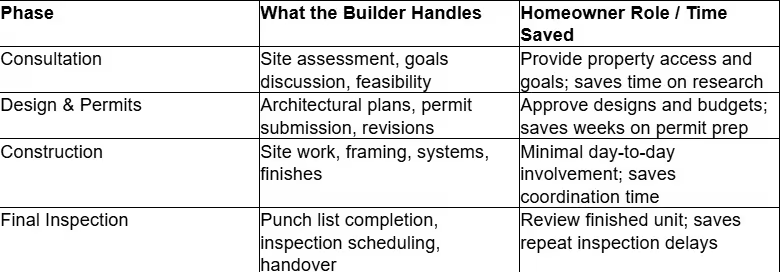
This table demonstrates how bundled services reduce friction and make sequencing predictable, and it sets up a deeper look at each stage’s steps and timing.
What Steps Are Included in a Complete ADU Construction Service from Design to Final Inspection?
A typical full-service ADU process begins with an on-site consultation and feasibility assessment, followed by schematic and final design, permit package preparation and submission, phased construction (site work, foundation, framing, MEP, finishes), and concludes with inspections and handover. Each phase has distinct deliverables: the design phase produces permit-ready drawings; the construction phase progresses through milestones such as rough-in inspections; and the final phase addresses punch-list items and certification. Expected durations vary by complexity, but a streamlined, experienced team can anticipate common obstacles and keep the project moving. Knowing these phases helps homeowners set realistic timelines and monitor progress efficiently.
These phased details lead naturally to how expert permit handling streamlines approvals specifically in Orlando.
How Does Permit Handling by Your Builder Streamline ADU Approval in Orlando?
When a builder manages permits, they prepare and submit code-compliant drawings, respond to reviewer comments, and coordinate inspections, which avoids the typical back-and-forth homeowners face when acting alone. Experienced builders know the documentation packet that Orlando or Orange County reviewers expect, such as site plans showing setbacks and utility tie-ins, reducing the chance of resubmission. They also schedule inspections at opportune milestones to prevent hold-ups and can implement minor plan adjustments without lengthy delays. This proactive permit management shortens approval timelines and reduces administrative burdens, enabling faster starts on construction.
Efficient permitting and scheduling depend on transparent communication, which is the next essential competency of a full-service builder.
Why Is Transparent Communication and Project Management Essential During ADU Construction?
Transparent communication and structured project management provide predictable milestones, clear points of contact, and a documented change-order process that prevents cost surprises and misaligned expectations. Regular updates—weekly or milestone reports—keep homeowners informed of progress and upcoming decisions, while an explicit process for change orders defines cost and timeline impacts before work proceeds. A single project manager who coordinates subcontractors, inspections, and materials reduces friction and clarifies responsibility for issues that may arise on site. Effective communication practices improve homeowner confidence and typically result in smoother final inspections and handovers.
Clear process management and communication lead directly into how financial terms and contracts affect project predictability.
What Are the Most Important Cost and Financing Factors When Choosing an ADU Builder?
Cost and financing decisions hinge on contract structure, ADU size and type, site conditions, and available financing products—each affecting your budget predictability and cash flow. Fixed-price contracts lock in scope and price for most construction elements, reducing the risk of escalating labor or material costs, whereas time-and-materials contracts transfer more cost variability to the homeowner. Site work, utility connections, and the desired finish level significantly influence cost ranges for Detached ADUs, Attached ADUs, and Garage Conversions in Orlando. Below is an EAV-style cost table that maps ADU types to estimated cost ranges and notes for Orlando/Central Florida homeowners, followed by a financing options list that explains common choices.
Before reviewing financing, consider typical cost ranges for different ADU types and the variables that drive price differences.
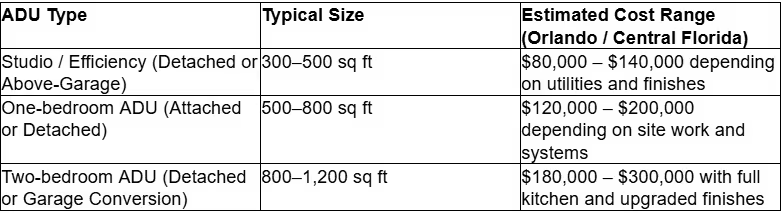
This table summarizes typical ranges and highlights that site access, foundation type, and utility extensions are primary cost drivers that builders must evaluate during the free consultation.
Now consider common financing options and when each fits your situation:
- Construction-to-permanent loans: Provide construction funds that convert to a mortgage after completion, suitable for larger builds that require staged draws.
- Home equity lines of credit (HELOC): Offer flexible access to home equity for smaller projects or partial funding needs with variable rates.
- Cash-out refinancing: Replaces your mortgage with a larger loan to access equity at a fixed rate, useful when market rates are favorable.
- Personal loans: Shorter-term, unsecured options for owners who prefer not to use home equity, typically with higher interest rates.
Each financing option has trade-offs between cost, terms, and qualification requirements, and homeowners should compare offers while considering timeline and budget predictability.
An important contract feature to understand is fixed-price contracting, which the next subsection addresses in depth.
How Do Fixed-Price Contracts Provide Budget Predictability for ADU Projects?
Fixed-price contracts specify a lump-sum for the agreed scope of work, protecting homeowners from most cost overruns due to labor or material price changes within the defined scope. Key items to verify include a detailed scope, clear inclusions and exclusions, defined allowances for finishes, and a transparent change-order process for scope changes. Fixed-price agreements reduce financial uncertainty but require careful upfront scope definition; ambiguities can lead to disputed costs for unanticipated conditions. Homeowners should compare line-item proposals and ask builders to explain allowances and contingency handling to ensure apples-to-apples comparisons across bids.
Understanding contract structure and allowances naturally leads to a more specific look at typical ADU costs in Orlando and what drives the ranges shown earlier.
What Are Typical ADU Construction Costs in Orlando and Central Florida?
Typical ADU costs reflect unit size, foundation type, utility extension needs, site access, and finish level, and they vary widely across Detached ADUs, Attached ADUs, and Garage Conversions. Lower-cost projects tend to reuse existing utilities and require minimal site grading, while higher-cost builds involve new septic or sewer connections, deeper foundations, or hurricane-rated windows and impact-resistant detailing. Finish choices—appliance packages, cabinetry, and flooring—also materially affect the final price. When evaluating proposals, homeowners should request line-item breakdowns for site work, structural elements, mechanicals, and finishes to identify where savings or upgrades are possible.
Cost estimates and contract type influence financing decisions, which is the subject of the next subsection.
Which Financing Options Are Available for ADU Construction in Florida?
Construction-to-permanent loans suit homeowners seeking a single-close solution for building and long-term financing, while HELOCs offer flexible, revolving access for phased spending and smaller projects. Cash-out refinancing replaces existing mortgage debt and can lock in competitive fixed rates if market conditions permit, and personal loans provide quick, unsecured funding for modest projects but usually at higher rates. Each option should be weighed for interest rate, repayment term, and tax implications; construction-to-perm is commonly chosen for larger ADUs because it matches construction draws to cash needs and consolidates financing upon completion. Discussing options with lenders and comparing total interest and fees helps homeowners choose the best path.
These financing choices tie back to contract type and predictability, supporting homeowner decisions about builder selection and project scope.
How Do Quality Materials and Craftsmanship Impact the Longevity of Your ADU?
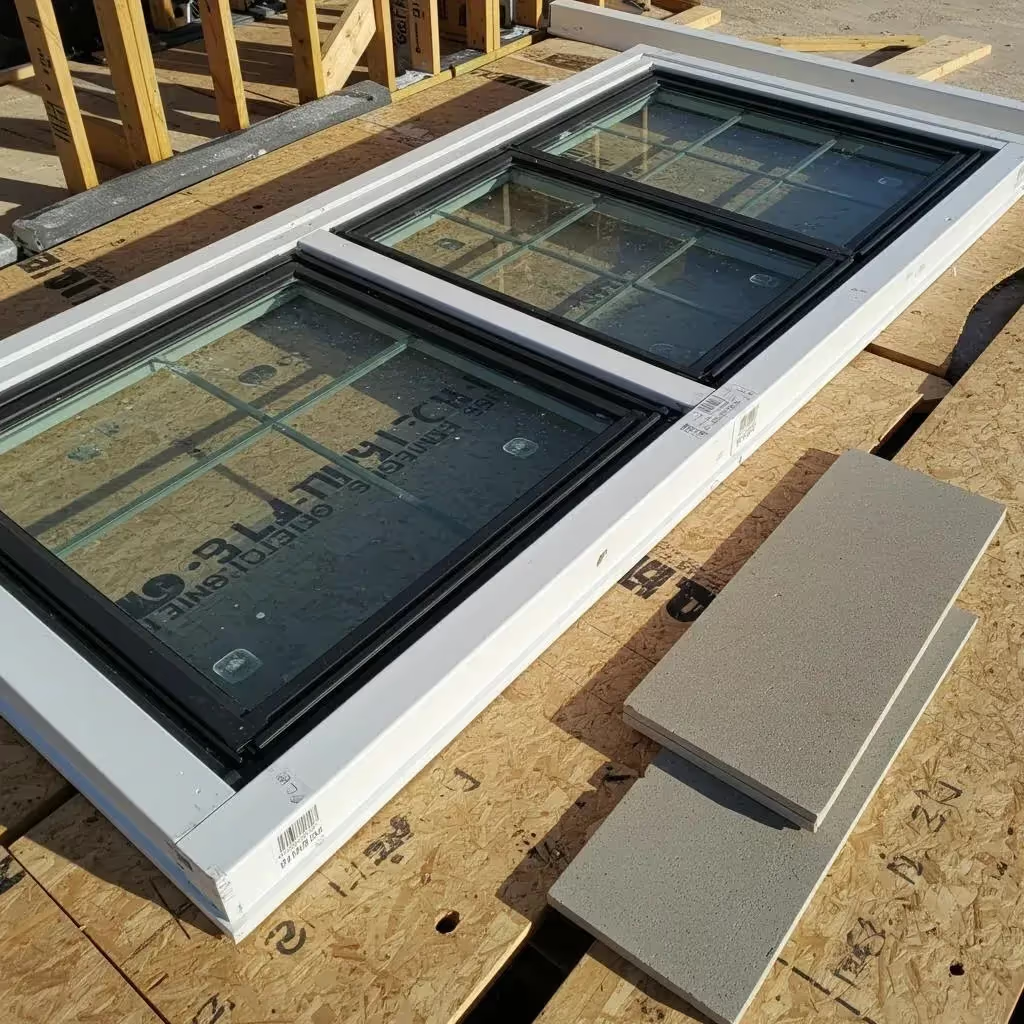
Quality materials and skilled craftsmanship directly affect an ADU’s durability, maintenance costs, and long-term resale or rental appeal in Florida’s humid, hurricane-prone climate. Selecting Florida-grade materials—treated framing, corrosion-resistant fasteners, impact-rated windows, and proper flashing—reduces moisture intrusion, pest damage, and wind-related failures, which in turn lowers lifecycle repair costs. Skilled craftsmanship ensures systems (HVAC, plumbing, electrical) are correctly installed and integrated with finishes, yielding better occupant comfort and fewer service calls. Below is a short maintenance checklist and a discussion of material choices that protect value over time.
Key maintenance and materials checklist to preserve ADU longevity:
- Regularly inspect flashing, roof penetrations, and gutters to prevent water intrusion and wood rot.
- Use HVAC filters and schedule seasonal service to maintain efficiency in Florida humidity.
- Choose impact-rated windows and protected openings for storm resilience and insurance benefits.
- Select quality finishes and cabinetry with warranties to minimize premature replacements.
These maintenance steps follow from selecting appropriate materials and workmanship, and they reduce long-term ownership costs while improving resale and rental ROI.
Why Are Florida-Grade Materials Essential for Weather-Resistant ADUs?
Florida-grade materials are designed to withstand high humidity, salt air, termites, and hurricane wind loads, and they play a critical role in minimizing degradation over time. Examples include pressure-treated or naturally rot-resistant framing where appropriate, corrosion-resistant fasteners, impact-rated windows, and properly specified roofing systems with secure hurricane straps; these choices reduce the risk of moisture infiltration and structural damage. Material selection should also consider ventilation and mold prevention strategies to maintain indoor air quality in humid climates. Choosing climate-appropriate materials reduces maintenance cycles and supports long-term durability and occupant safety.
Selecting proper materials leads into the discussion of craftsmanship and how finish quality affects usability and value.
How Does Skilled Craftsmanship Affect Your ADU’s Value and Functionality?
Skilled craftsmanship affects functional outcomes—tight door and window fits, properly sealed wet areas, and smoothly operating mechanical systems—that determine occupant satisfaction and property value. High-quality workmanship minimizes callbacks for leaks, electrical issues, or HVAC malfunctions, and finer finish details like level cabinetry and durable floor installations increase market appeal for renters or buyers. Warranties on workmanship and materials provide additional homeowner safeguards and reflect a builder’s confidence in their process. Investing in both quality materials and experienced trades produces an ADU that performs well over time and delivers stronger ROI.
Good materials and workmanship interact with permitting and regulatory compliance, which we cover next in the context of Orlando rules.
What Local Regulations and Zoning Requirements Should You Consider When Selecting an ADU Builder?
Understanding local regulations—permit requirements, setbacks, lot-size thresholds, and parking rules—is critical because zoning and building codes determine what you can build and how quickly you can move from design to construction. Orlando ADU zoning laws often specify where Detached ADUs or Above-Garage Units can be located on a lot, required setbacks from property lines, and whether additional parking or lot coverage rules apply. Builders that perform a site-specific zoning check during the consultation phase can flag variance needs early and advise on design strategies to comply without costly redesigns. The checklist below outlines typical regulatory items to review with any prospective builder before signing a contract.
Regulatory checklist to review with your ADU builder:
- Confirm lot size eligibility and whether ADUs are permitted under local Orlando zoning designations.
- Verify setback requirements and how they apply to Detached ADUs, Attached ADUs, and Above-Garage Units.
- Determine parking and lot coverage rules that could affect design feasibility.
- Ask whether variances or special approvals are commonly required for similar properties and the expected timeline.
These regulatory checks naturally lead to how a qualified builder helps navigate the permitting process and compliance tasks.
What Are Orlando’s Key ADU Zoning Laws, Setbacks, and Lot Size Requirements?
Orlando’s zoning framework includes rules on where ADUs can be placed, minimum lot sizes for accessory units, and required setbacks from property lines that influence footprint and orientation choices. Typical considerations include whether an ADU counts toward lot coverage limits, any special parking requirements, and conditions where owner-occupancy or short-term rental restrictions apply; these specifics vary by local ordinance and parcel zoning. A site-specific review by a builder or designer will reveal whether variances, waivers, or design adjustments are necessary and estimate the likely permit timeline. Always ask a prospective builder to perform a zoning feasibility check and provide a written summary before advancing to design.
Knowing how builders assist with compliance clarifies the concrete services they should provide, discussed in the next subsection.
How Can Your Builder Help Navigate Permitting and Compliance Challenges?
A competent builder prepares permit-ready documents, submits applications to the City of Orlando or Orange County Building Department as appropriate, coordinates revisions requested by reviewers, and schedules inspections to maintain momentum. Builders that include permit handling in their services reduce homeowner administrative tasks and lower the risk of scope-related rejections that cause delays. They can also advise on variance strategies or alternative designs that meet both regulatory constraints and homeowner goals. This hands-on approach to compliance shortens approval timelines and helps prevent unexpected stop-work orders.
Assistance with permitting and compliance contributes to the confidence homeowners place in builders, which is reinforced by documented track records and testimonials.
Why Is Choosing a Builder with a Proven Track Record and Client Testimonials Important?
A builder’s case studies and testimonials provide practical evidence of their ability to deliver ADU projects that meet scope, timeline, and quality expectations, enabling homeowners to forecast likely outcomes for their own projects. Case studies that include project scope, key challenges, timeline, and outcomes—such as final inspection approval and owner satisfaction—are especially useful for evaluating fit. Reviews and testimonials reveal themes around responsiveness, change-order handling, and warranty enforcement, and they help homeowners compare how different builders communicate and manage issues. Below is guidance on what to look for in case studies and how to interpret client feedback.
Elements to seek in strong ADU case studies:
- Project scope and ADU type (Detached ADU, Garage Conversion, In-Law Suite).
- Key challenges and how the builder resolved zoning or site constraints.
- Timeline milestones and final inspection outcomes.
- Measurable results such as rental readiness or homeowner satisfaction.
Evaluating these elements helps homeowners distinguish between marketing claims and substantiated performance, which supports a more confident hiring decision.
How Do Case Studies Demonstrate a Builder’s Ability to Meet Diverse ADU Needs?
Well-structured case studies show the initial problem (site constraints or permit obstacles), the design and construction solution, and measurable outcomes like timeline adherence and final inspection passage. They illustrate how the builder adapts designs to different ADU types—Detached ADUs, Attached ADUs, or Garage Conversions—and manage utility, foundation, or access complications. A strong case study also describes communication practices and how change orders were handled to stay within budget. Homeowners can use a case-study template to request consistent information from multiple builders and compare demonstrated capabilities side-by-side.
Case studies and reviews lead into common homeowner feedback themes that indicate trustworthy performance.
What Do Orlando Homeowners Say About Their Experience with Local ADU Builders?
Orlando homeowners commonly praise builders who provide transparent timelines, proactive permit handling, and clear change-order documentation, and they note frustration with builders who fail to communicate schedule impacts or hidden costs. Positive themes include responsiveness to questions, clean jobsite management, and timely resolution of warranty items after handover. Red flags in reviews include repeated reports of missed inspection dates, unexplained cost increases, or difficulties reaching the project manager; these warrant further vetting. When reviewing feedback, cross-check testimonials with project photos and permit records where possible for additional verification.
Satisfied clients and clear evidence of consistent performance naturally encourage homeowners to take the next step: initiating a consultation and estimate.
How Can You Start Your ADU Project with the Right Builder Today?
Starting an ADU project begins with a clear, documented consultation that includes a site assessment, feasibility review, scope discussion, and a detailed, no-obligation estimate that outlines scope, assumptions, and exclusions. Prepare property information—lot survey, existing utility locations, and goals for the ADU—to help the builder deliver an accurate estimate. Many qualified builders offer Free Estimates or a Free Consultation that include a no-obligation property assessment and detailed cost estimates; these consultations reveal site-specific constraints and produce a baseline budget. The checklist and CTA below explain what to expect during the initial engagement and how to compare multiple bids.
Checklist of what to prepare and expect for a free consultation and estimate:
- Gather a property survey, any existing site plans, and notes on utilities and access.
- Be ready to discuss desired ADU type (Detached ADU, Attached ADU, Garage Conversion) and target finishes.
- Expect a site walkthrough, preliminary feasibility feedback, and a timeline estimate.
- Request a written, itemized estimate and clarification on permit handling and inclusions.
This preparation supports apples-to-apples comparisons between builders and positions you to select the contractor best suited to your project.
What Should You Expect During a Free Consultation and Property Assessment?
During a free consultation and property assessment, expect the builder to conduct a site walkthrough, confirm lot constraints and setbacks, discuss utility access and structural considerations, and outline preliminary cost drivers and a basic timeline. The builder should ask about your goals—rental income, family use, finish level—and document any site issues that could affect cost or schedule. A thorough provider will explain permit steps and highlight likely variances or approvals needed for an Orlando property. After the visit, you should receive a follow-up summary that clarifies next steps and what documentation the builder needs to prepare a detailed estimate.
Understanding the consult output helps you request and compare detailed bids, described next.
How Do You Request a Detailed, No-Obligation ADU Estimate?
To obtain a detailed, no-obligation estimate, provide the builder with your property survey, desired ADU type and size, scope preferences for finishes and systems, and any timeline constraints; ask for a line-item proposal that separates site work, structural, MEP, and finish costs. Compare multiple bids by reviewing scope definitions, allowances, exclusions, warranty terms, and whether permits and inspections are included in the fixed price. Ask builders to explain assumptions behind allowances and how change orders are priced so you can compare apples to apples. Finally, use the free consultation output to validate feasibility and select the builder who communicates most clearly and demonstrates local permitting expertise.
For homeowners ready to engage, consider requesting Free Estimates or a Free Consultation from a locally qualified provider to get a site-specific assessment and a documented proposal.
For a practical example of a builder who combines local expertise, licensing, permit handling, fixed-price contracting, and complimentary property assessments, homeowners in Saint Cloud and Central Florida often review licensed ADU contractor Orlando credentials and offerings. TEK Construction Group is an adu building contractor service based in Saint Cloud, FL that serves Central Florida including Orlando and markets services such as Detached ADUs, Attached ADUs, Garage Conversions, Above-Garage Units, Custom Designs, Design and Permits, Construction, Final Inspection, and Free Estimates. TEK Construction Group emphasizes Orlando local expertise, is Licensed and Insured (FL License CGC 1530543), promotes a Proven Track Record and Fixed-Price Contracts, and offers Free Consultation and Free Estimates with a no-obligation property assessment and detailed cost estimates to help homeowners begin confidently.
Give us a call!